What Is It Like to Travel in Tibet?
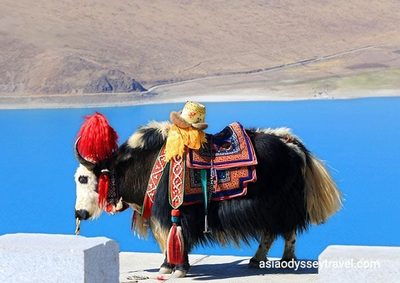
Traveling to the "Roof of the World" requires more planning than your average trip, but the reward — turquoise lakes at 4,500m, ancient monasteries clinging to cliffs, and the profound spirituality of Tibetan Buddhism — is unmatched.
The Xizang Autonomous Region (Xizang / Tibet) sits on the Qinghai-Xizang Plateau, averaging over 4,000m in elevation, and combines a landscape of Everest and sacred lakes with a living Buddhist culture centered on Lhasa. Because it is a border region, visiting is structured: foreign travelers must enter with a licensed operator, carry permits, and move at an altitude-friendly pace. This guide covers the essentials — permits, altitude, highlights, and seasons — so you know exactly what to expect.
Permits: What You Need
All foreign travelers need a Tibet Travel Permit (TTP) issued by the Tibet Tourism Bureau. You must book through a registered tour operator (like Asia Wonder Tours) — independent travel is not permitted. We handle all paperwork. You'll need: a valid passport copy, Chinese visa, and confirmed tour booking. Apply at least 20 days before travel.
The TTP is only the starting point. If your itinerary reaches Everest Base Camp, Mount Kailash, or other restricted border areas, additional alien's travel / border permits are required, and these take longer to process. Journalists, government-affiliated passport holders, and certain nationalities may face extra scrutiny. Because checkpoints inspect documents along every major road, carry your passport and permit copies at all times. We submit everything on your behalf and hand the permits to your guide in Lhasa. For the full step-by-step process, read how to apply for a Tibet Travel Permit.
Altitude: The Most Important Thing
Lhasa sits at 3,650m. You WILL feel the altitude for the first 1-2 days — headaches, shortness of breath, fatigue. Our itineraries build in Lhasa acclimatization days. Key rules: ascend slowly, drink 3-4 liters of water daily, avoid alcohol for the first 3 days, and take Diamox if your doctor approves. Most people acclimatize within 48 hours.
Altitude affects everyone regardless of fitness, so even experienced trekkers should not rush. Plan to arrive in Lhasa and take day one gently: a short walk around the Barkhor, an early night, no heavy climbing. Our tours deliberately front-load Lhasa before any higher destinations such as Yamdrok Lake (4,441m) or Namtso Lake (4,718m). For symptoms, medication, and warning signs, our complete Lhasa altitude guide goes deep.
Lhasa Highlights
Potala Palace: The iconic 13-story palace dominates Lhasa's skyline. Book tickets days in advance (your guide handles this). The climb is steep — take it slow. Jokhang Temple: Tibet's most sacred temple, where pilgrims prostrate in devotion. Join the Barkhor Circuit kora with chanting locals. Sera Monastery: Visit at 3pm for the famous monk debates — animated philosophical arguments with dramatic hand-slapping gestures.
Beyond these three, Drepung Monastery (once the world's largest gompa) sprawls on a mountainside a short drive west, and the Barkhor Circuit itself — the clockwise pilgrim route around Jokhang — is the best free show in Lhasa: butter-lamp smoke, prostrating pilgrims, and prayer wheels turning hour by hour. Pull up a chair at a sweet-tea house and watch the city breathe. For the full sacred-route rundown, see our top 10 Lhasa monasteries, and between temples, taste your way through Tibetan food in Lhasa.
Best Season
May–October is the Tibet travel window. May and October offer the clearest skies. July–August is warmer but has more rain. Winter (November–April) is brutally cold and many areas are inaccessible, but Lhasa itself can be visited year-round.
Match your season to your goal. For Everest and the high passes, choose April-May or September-October for the clearest mountain views. For festivals, watch for Saga Dawa (around June, celebrating the Buddha) and the Shoton/Yogurt Festival (August, when giant thangkas are unveiled at Drepung). For value and quiet, the shoulder months and even a crisp Lhasa winter deliver clear blue skies and almost no crowds — just pack seriously warm layers.
Etiquette at Sacred Sites
Tibetan Buddhism shapes daily life, and a few habits will make your visit smoother and more respectful. Always walk clockwise around temples, stupas, and pilgrimage circuits (kora). Never step on a threshold, turn down a prayer wheel, or photograph pilgrims or inside chapels without asking. Dress modestly for monasteries (cover shoulders and knees), remove hats and shoes in chapels, and never touch a monk's head. Butter-lamp rooms are dark and slippery — move slowly and follow your guide. These small courtesies open doors: a respectful traveler is often invited to share yak butter tea with a family.
Money, Connectivity & Practicalities
Bring cash and cards that work in China: Lhasa and Shigatse have ATMs and accept major mobile payment systems in larger hotels, but small towns and nomad areas run on cash. English is limited outside the tourist circuit, which is why your guide does the talking. Mobile data works in cities and along the main Friendship Highway but drops out in remote valleys — a reason to download maps and entertainment before you leave Lhasa, and a chance to genuinely disconnect.
A Typical First-Timer Itinerary
A comfortable introduction looks like this: Day 1-3 in Lhasa for acclimatization, Potala, Jokhang, Barkhor, Sera, and Drepung; Day 4-5 a loop to Yamdrok Lake, Gyantse, and Shigatse's Tashilhunpo Monastery; Day 6-7 continue toward Everest's north face via Shegar; then return or cross into Nepal. This pace protects your acclimatization and gives you the high points without rushing. Our Tibet itineraries follow exactly this arc and can be shortened or extended to your schedule.
Between the sights, leave room to simply sit: on the Barkhor with a thermos of sweet tea, at a Sera courtyard watching the debates, or at a high pass watching clouds move across the plateau. Half the magic of Tibet is unstructured — the pilgrims, the nomads, the long light — and an itinerary that reserves downtime usually produces the best memories.
Where Tibet Fits on a Wider Asia Trip
Tibet pairs naturally with several of the region's greatest journeys. Continue overland to Kathmandu for Himalayan temples and Sherpa country, combine with Nepal for an Annapurna or Everest-region trek, or link it to a classic China itinerary of Beijing, Xi'an, and Chengdu before the train to Lhasa. Because your Chinese visa is already a prerequisite for the TTP, building Tibet into a larger China trip is logistically smooth. Whether you have 5 days or 3 weeks, the golden rule stays the same: arrive in Lhasa, acclimatize, then travel higher. Do that, and the Roof of the World rewards you with a stillness few places on Earth can match.
Frequently Asked Questions
Can I travel independently in Tibet?
No. Foreign travelers must visit Tibet through a registered tour operator, with a guide, vehicle, and permits. Independent free travel is not permitted in the TAR.
Is Tibet safe for travelers?
Yes, for organized visitors. The main risks are altitude and remote-distance travel rather than crime. Follow acclimatization advice and stay with your guide; our itineraries are designed around these realities.
Do I need to speak Chinese or Tibetan?
No. Your licensed guide handles translation, permits, and negotiations. English-speaking guides are standard on organized tours, and basic phrasebook words (such as tashi delek, "blessings") go a long way.
What should I pack for Tibet?
Layers are everything: a down jacket, thermal base layers, sun protection (UV is extreme at altitude), sturdy shoes, and a reusable water bottle. Even summer nights are cool, and high passes are cold year-round.
Permits sorted, altitude understood, monasteries on the calendar. Explore our Tibet tours with permits and acclimatization days built in, or contact us for a custom Lhasa-and-beyond itinerary.