Thailand's coastlines are dotted with hundreds of islands, and choosing between them is the single biggest decision in planning a beach trip here. Do you want late-night beach clubs and an airport you can fly to directly, limestone cliffs rising straight out of shallow water, or a small island you can walk end to end at low tide? This guide compares the four names that appear on every shortlist — Phuket, Koh Samui, Krabi and the Phi Phi islands — by the questions that actually matter: who each place suits, what the beaches feel like, how you get there, when the weather is good, and how a trip to each one tends to feel on the wallet.
The encouraging part is that every one of the four is reachable on a standard two-week Thailand itinerary, and most first-timers arrive through Bangkok before connecting onward. If you want the quickest vibe-by-vibe read across a longer island list, from Koh Lipe to Koh Tao, see our companion guide to Thailand's islands and which paradise is right for you. This guide goes deeper on the four anchors that most travelers actually book.
The Big Four at a Glance
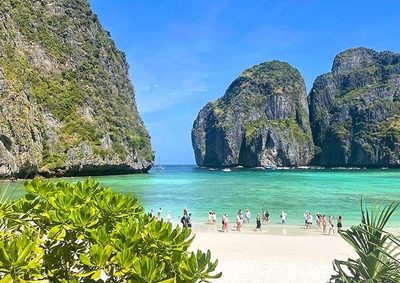
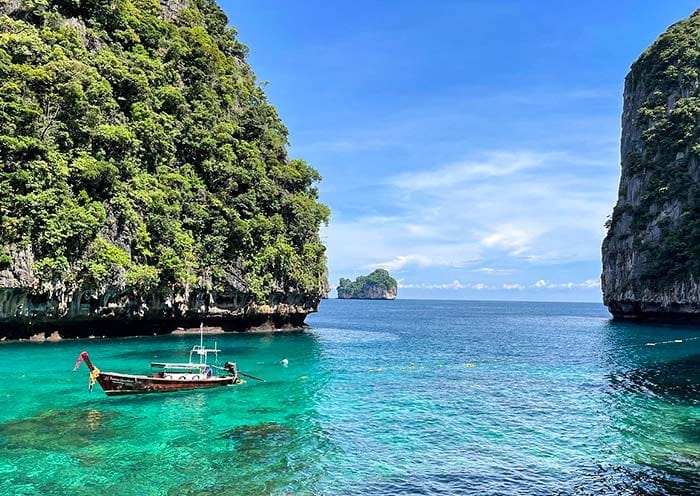
Phuket is Thailand's largest island and the one with its own international airport, which makes it the default choice for first-timers, families and anyone who wants the most direct route to sand. Koh Samui sits in the Gulf of Thailand and mixes resort luxury with a relaxed backpacker strip around Chaweng Beach. Krabi is not really an island at all — it is a mainland province of limestone karsts, river estuaries and longtail-boat piers that launch you out to nearby beaches and islands. The Phi Phi islands are a small archipelago off the Krabi coast, famous for Maya Bay and for looking exactly the way Thai beaches look in films.
| Place | Best for | Vibe | Beach type | Getting there |
|---|---|---|---|---|
| Phuket | Families, first-timers, nightlife seekers | Developed, busy, everything on tap | Long sandy beaches and sheltered bays with good swimming | Direct international and domestic flights |
| Koh Samui | Couples, honeymooners, easy island life | Glamour next to backpacker casual | Curved white-sand bays, calm Gulf water | Flights from Bangkok, or ferry from Surat Thani |
| Krabi (Railay / Ao Nang) | Climbers, nature lovers, slow travelers | Laid-back, scenic, adventure-tinged | Cliff-fringed coves reached by boat | Fly to Krabi airport, then road and longtail boat |
| Phi Phi | Day-trippers, snorkelers, social backpackers | Picturesque, lively, car-free | White sand, crystal water, reefs and sheltered bays | Ferry from Phuket or Krabi, roughly two hours |
A word on how each place feels on the wallet, without quoting fixed prices that shift by season. Phuket offers the widest range: eat cheap at local markets or spend freely at beachfront resort restaurants. Koh Samui skews upscale around its beachfront resorts, but budget guesthouses still exist a short walk inland. Krabi and Ao Nang sit in the middle, with guesthouses and midrange hotels outnumbering luxury properties. Phi Phi is compact — its room stock is small and fills early, so book ahead in peak months and expect the choice to be made for you if you arrive on spec.
When to Go: Two Weather Sides of the Peninsula
Thailand's islands do not run on one shared weather calendar, and this trips up more itineraries than anything else. The Andaman coast — Phuket, Krabi and Phi Phi — follows a dry season from roughly November to April, with calm seas and sunny days at their best between December and March. From May to October this side moves into the green season: rain that often arrives as short afternoon downpours, rougher seas, and some boat tours pausing for safety.
The Gulf coast, where Koh Samui sits, keeps a different clock. Its driest, sunniest stretch runs roughly from January through mid-year, while the wettest months tend to arrive later in the year, around October through December. The practical takeaway is simple: if your travel dates fall in the Andaman green season, look east to the Gulf, and if the Gulf is heading into its wet months, the Andaman is likely calmer. For a month-by-month view across the whole region, our guide to the best time to visit each Asian country, month by month lines the seasons up side by side.
How to Get to Each Island
Most international visitors start in Bangkok. From Suvarnabhumi or Don Mueang airports, domestic flights reach Phuket and Krabi in about an hour and Koh Samui in under an hour and a half — the fastest route, and usually worth it when you only have a week. Long-distance buses and overnight trains connect Bangkok to Surat Thani on the Gulf coast, from which ferries cross to Koh Samui; this is the slow, low-cost option favored by overland travelers who treat the journey as part of the trip.
Once you are island-side, the connections are simple. Ferries link Phuket to Phi Phi and to Krabi's Ao Nang and Railay area, while songthaews — shared pickup trucks — and taxis cover the short hops between beaches. Railay Beach, the famous cove in Krabi ringed by karst cliffs, is reachable only by longtail boat from Ao Nang, a ten-minute ride that feels like the opening scene of a beach novel. If your route begins in the capital, spend a few days first with our Bangkok first-timer guide to temples, markets and rooftop bars before the transfer south.
Budget Tips That Actually Matter
- Book early in peak season: December-to-March weeks on Phi Phi and the smaller Samui bays sell out first, especially over the Christmas and New Year window.
- Eat where Thai families eat: local markets and street stalls cost a fraction of beachfront restaurants, and both Phuket Town and Krabi Town excel at this.
- Commit to fewer islands: one well-chosen island plus a day trip beats four rushed transfers. Phi Phi works beautifully as a day trip from Phuket or Krabi if you do not want to overnight.
- Pick the right coast for the month: traveling the "wrong" coast in green season means rain and paused dive boats, not cheaper paradise.
- Compare operators on the ground: arrange island-hopping speedboat tours in person at the pier once you arrive, and compare a few operators side by side before booking.
Frequently Asked Questions
Which Thai island is best for a first-time visitor?
Phuket is the easiest first choice: direct flights, every comfort level available, and beaches suited to families, couples and party crowds alike. If you want the scenery without the big-island bustle, fly to Krabi and base yourself at Railay or Ao Nang.
Is Phi Phi worth an overnight stay, or just a day trip?
Phi Phi is at its best at sunrise and after the day crowds leave in the late afternoon, so an overnight stay rewards slow travelers and snorkelers. If your time is tight, a day trip from Phuket or Krabi still covers Maya Bay and the main snorkel stops.
When is the cheapest time to visit the Thai islands?
Green-season months carry lower prices and thinner crowds, but the trade-off is rain and reduced boat tours. The sweet spot for most travelers is the shoulder weeks around the edges of high season, when seas have calmed but prices have not yet peaked.
Can I combine island time with northern Thailand?
Absolutely. Most of our clients pair a few beach days with Chiang Mai and Chiang Rai for temples, markets and hill-country stays — see our guide to Thailand beyond the beaches and northern hill tribe treks. Domestic flights connect the islands to the north in a couple of hours.
Deciding between Phuket, Koh Samui, Krabi and Phi Phi is really about the pace you want from a holiday. Tell us your dates and who is traveling — families, honeymooners, a group of friends — and we will map the islands that fit. Browse our Thailand tours or send us a message for a custom island-and-city itinerary built around your time.