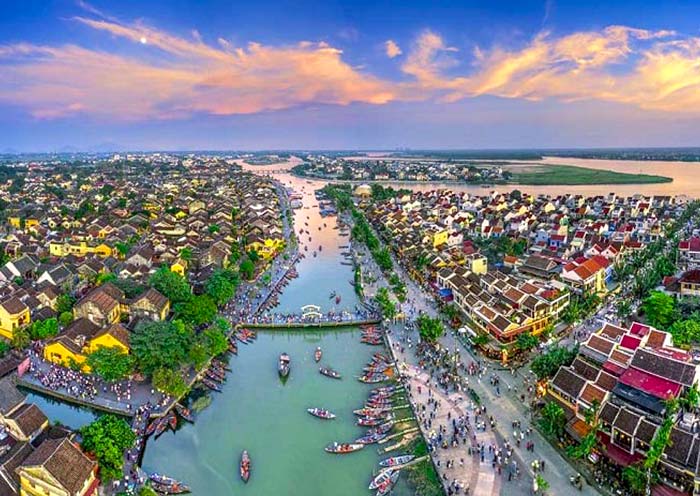
Hoi An is arguably Vietnam's food capital. The ancient trading port absorbed culinary influences from China, Japan, France, and beyond — creating a unique food culture found nowhere else in Vietnam. Here's what to eat and where.
The town is a UNESCO World Heritage Site on the Thu Bon River, roughly 30 minutes by road from Danang. Its lantern-lit streets are closed to cars each evening, and the food scene is walkable: you can eat a five-course meal by strolling from stall to stall. Many dishes here exist only in Hoi An because of the local water, local herbs, and the fusion of trading-port traditions. It pairs perfectly with our wider Vietnam itineraries.
Cao Lau
The dish that defines Hoi An. Thick, chewy noodles (legend says they're made with water from a specific Cham well), slices of char siu pork, crispy croutons, bean sprouts, and fresh herbs in a small pool of savory broth. The best bowl in town is at Cao Lau Ba Be on Tran Phu Street — three generations of the same family.
Cao lau's name even hints at its Chinese roots, and the noodles have a texture unlike anywhere else in the country. Expect to pay the equivalent of a dollar or two for a bowl. Other excellent versions appear at Madam Khanh, the "Banh Mi Queen," who also serves a mean cao lau.
Banh Mi Phuong
Made globally famous by Anthony Bourdain, this humble stall serves Vietnam's most celebrated banh mi. Crispy baguette stuffed with five types of pork, pâté, pickled vegetables, fresh chili, and a secret sauce. It costs less than a dollar and will ruin all other sandwiches for you.
The baguette itself is a legacy of French colonial rule, but the fillings are pure Vietnamese: head cheese, grilled pork, cured ham, pâté, and fresh coriander. Go early, as queues form by mid-morning and the best fillings sell out.
White Rose Dumplings (Banh Bao Banh Vac)
Delicate translucent dumplings filled with minced shrimp, topped with crispy fried shallots, and served with a tangy dipping sauce. Only one family in Hoi An knows the full recipe — they supply every restaurant in town. Eat them at White Rose Restaurant, the family's own place.
The dumplings are shaped like a white rose, using rice paper pounded from a local variety of rice. A plate of a dozen is light, fragrant, and nearly weightless. The family also makes the fried "wonton" version served across town.
Com Ga Hoi An
Hoi An chicken rice — shredded poached chicken, fragrant turmeric rice, fresh herbs, and a spicy dipping sauce. The local specialty spot is Com Ga Ba Buoi, where they've been making it the same way for decades.
The rice is cooked in chicken broth and tinted with turmeric, giving it a warm golden hue and a depth that sets it apart from the more famous Hainanese chicken rice in Saigon. Add a bowl of clear soup and a squeeze of lime.
Bánh Xèo
Crispy Vietnamese crepes filled with shrimp, bean sprouts, and herbs. Wrap pieces in rice paper with fresh greens and dip in nuoc cham. Ba Le Well serves the best in Hoi An's old quarter.
The name means "sizzling cake," after the sound of the rice batter hitting the hot pan. At Ba Le Well and similar spots, you sit at a long table and wrap your own, often with unlimited refills. It is a fun, sociable dinner.
More Dishes to Seek Out
- Mi Quang: turmeric-tinted noodle soup with shrimp, pork, herbs, and a rich broth, a central-Vietnamese specialty at its best around Hoi An.
- Com lau (baby clam rice): stir-fried baby clams with rice and herbs, best eaten at beach-side stalls near An Bang.
- Banh dap: cracked rice crackers served with a warm shrimp paste, a crunchy street snack.
- Fresh spring rolls: rice paper packed with prawns, herbs, and vermicelli, dipped in peanut sauce.
Wash it all down with local Tra Da (iced tea), fresh coconut, or a cup of strong Vietnamese iced coffee. For a structured way to learn the cuisine, book a morning cooking class: most start with a market tour and end with you cooking your own four-course lunch.
Where to Eat and How to Eat Like a Local
Hoi An's old quarter is compact, so the best strategy is to graze. Start with breakfast at a noodle stall near the Central Market, where locals eat mi quang or cao lau before 8am. Mid-morning, grab a banh mi to go. Lunch is the big meal of the day: sit down at a banh xeo restaurant like Ba Le Well or Mermaid for a hands-on wrap-your-own feast. Evening belongs to the lantern-lit streets along the river, where street vendors sell fresh spring rolls, grilled squid, and sugar cane juice from small carts. For a splurge, Hoi An has several excellent farm-to-table restaurants set in lush gardens a short bike ride from town.
Dress comfortably, carry small notes (most stalls do not take cards), and do not be shy about pointing at what other tables are eating. A food tour with a local guide is worth the modest fee on your first night, because it removes the guesswork and usually includes dishes you would otherwise walk right past. After eating, take a rowboat ride through the lantern-lit waterways of Cam Thanh coconut village, where fishermen paddle with a single oar.
Time your visit around the Full Moon Lantern Festival, held on the 14th or 15th day of the lunar month, when electric lights in the old quarter are switched off and the streets glow only with paper lanterns. Locals release flower-laden candle lanterns onto the river, and the town is at its most magical. Even on ordinary nights, evening is when Hoi An is at its best: tailor shops glow, vendors grill over charcoal, and the Japanese Covered Bridge is lit against the dark water.
Frequently Asked Questions
Is Hoi An expensive for food?
No — it is one of the cheapest food cities in Southeast Asia. Street dishes cost the equivalent of one to two US dollars, and even a nice restaurant dinner with drinks runs well under ten dollars per person.
What is the best street food in Hoi An?
Cao lau and banh mi Phuong are the two unmissables, followed by white rose dumplings, com ga (chicken rice), and banh xeo crepes. Eating your way through all five in one day is a classic first-timer's plan.
Do I need to book restaurants in Hoi An?
For famous stalls like Banh Mi Phuong and Cao Lau Ba Be, queues form but move quickly. For nicer riverside restaurants, book a table at sunset during high season.
Can I take a cooking class in Hoi An?
Yes, Hoi An is the cooking-class capital of Vietnam. Half-day classes include a market tour, boat ride, and hands-on cooking, and they suit all skill levels. If you want to continue the food journey north, our Vietnam in two weeks itinerary connects Hoi An with Hanoi and the Mekong.
Want to eat your way through Hoi An like a local? Our Vietnam tours include guided street-food walks and market-to-table cooking classes. Get in touch and we will build a culinary itinerary around Hoi An, Hue, and beyond.