Vietnam is a country of staggering beauty and diversity — from the limestone karsts of Halong Bay to the lantern-lit canals of Hoi An and the frenetic energy of Ho Chi Minh City. Two weeks is the sweet spot for seeing the highlights without rushing.
Running more than 1,600 kilometers from north to south, Vietnam rewards slow long-distance travel but can also be compressed into a first two-week highlights loop. Domestic flights connect Hanoi and Ho Chi Minh City in around two hours, which frees you to spend your time on the ground rather than on buses. This itinerary moves north to south and pairs naturally with our Vietnam tours.
Days 1-3: Hanoi
Start in the 1,000-year-old capital. Wander the Old Quarter's 36 streets — each named for the goods once sold there (Silk Street, Paper Street, Herbal Medicine Street). Sip egg coffee at a hidden balcony cafe overlooking Hoan Kiem Lake. Eat bun cha (grilled pork with noodles) at the spot where Obama and Anthony Bourdain dined. Don't miss the Temple of Literature and a water puppet show at Thang Long Theatre.
Hanoi's winters (November to February) can be surprisingly cool, while summers are hot and humid. Mornings are for walking, midday for a museum or cafe, and evenings for the street-food strips around the Old Quarter. Cross Red River bridges to see the quieter West Lake pagodas if you have an extra half day.
Days 3-4: Halong Bay
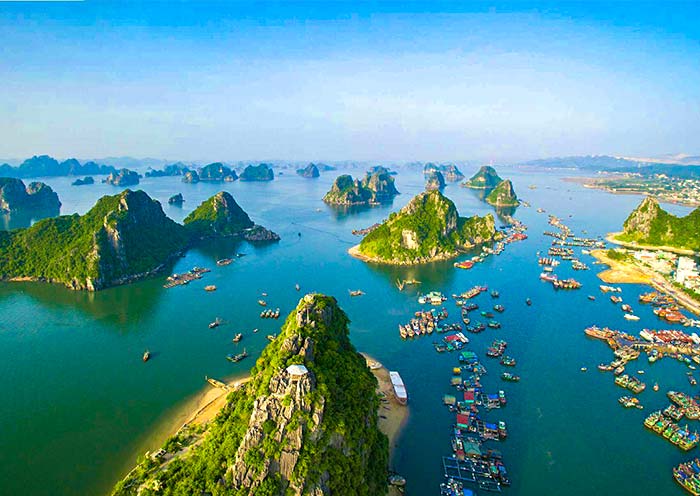
Board a traditional junk boat for an overnight cruise among 1,600 limestone islands. Kayak through hidden lagoons, explore floating fishing villages, and watch sunrise from the deck with a Vietnamese coffee in hand. Choose a boat that includes Bai Tu Long Bay — it's the quieter, equally beautiful neighbor.
A one-night cruise is enough for a first visit, though two nights gives you time for a kayak and a sunset beach. Check that your boat is registered and uses proper waste disposal; the bay's ecosystem is under pressure from tourism. Overnight stays are best between October and April, when the seas are calm.
Days 5-7: Hoi An & Hue
Hoi An is Vietnam's most charming town — lanterns, tailor shops, and some of the best food in the country. Take a cooking class, get measured for a custom suit (ready in 24 hours), and bike through rice paddies to An Bang Beach. Spend a day in Hue, the former imperial capital, exploring the Citadel and the elaborate royal tombs along the Perfume River.
Fly from Hanoi to Danang and transfer 40 minutes to Hoi An. In Hue, split your time between the walled Citadel and the tombs of Tu Duc, Khai Dinh, and Minh Mang, which are scattered along the Perfume River and best visited by boat. For a deeper dive into the cuisine, our Hoi An street food guide lists the exact stalls.
Days 8-14: Ho Chi Minh City & Mekong Delta
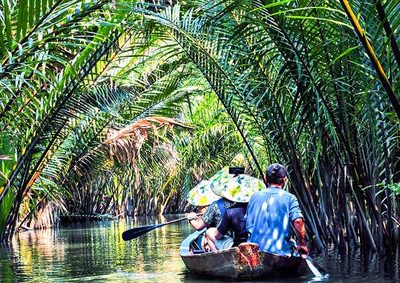
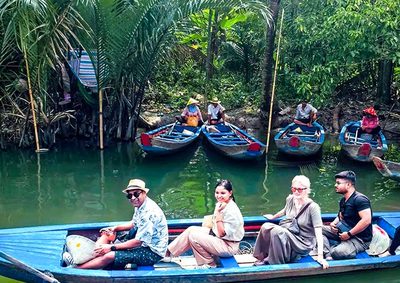
Saigon moves at double speed. Navigate the motorbike chaos to reach Notre-Dame Cathedral, the War Remnants Museum, and Ben Thanh Market. Take a day trip to the Cu Chi Tunnels. Then slow down with 2 days in the Mekong Delta — floating markets at dawn, coconut candy workshops, and homestays among fruit orchards.
The War Remnants Museum is unflinching and sobering; allow a few hours and a break afterward. Cu Chi, 90 minutes from the city, lets you crawl a section of the famous tunnel network. In the Delta, base in Can Tho or Ben Tre for early-morning boat trips to the Cai Rang floating market, and consider a night homestay in a family orchard.
Transport and Logistics
- Flights: book Hanoi to Danang and Danang to Ho Chi Minh City flights; they are cheap and save a full day on the bus.
- Train: the Reunification Express is scenic but slow; suitable only if you have extra time.
- Visa: check requirements in advance; many nationalities need an e-visa.
- Best time: visit the north in October to December and the south in January to March; central Vietnam is driest from February to August.
Money, Food, and Cultural Notes
Vietnamese street food is the backbone of any two-week trip. In Hanoi, seek out pho bo (beef noodle soup) for breakfast, bun cha (grilled pork and noodles) for lunch, and banh cuon (steamed rice rolls) for a light dinner. In Hoi An, follow our dish-by-dish guide to cao lau, white rose, and banh mi. In Ho Chi Minh City, try com tam (broken rice with grilled pork), hu tieu noodle soup, and the extraordinary iced coffee culture. Portion sizes are small and prices are low, so eating four or five times a day is normal.
Culturally, learning a handful of Vietnamese phrases goes a long way, as does removing shoes when entering a local home or a pagoda. Dress modestly at temples in Hue and the Mekong. Bargaining is expected at markets but not in shops with fixed prices. For a longer look at budgeting across the region, our Asia trip cost guide breaks down realistic daily budgets for Vietnam and its neighbors.
If you have more than two weeks, Vietnam rewards extensions. Add three to four days in Sapa or the Ha Giang loop for rice terraces and hill tribe villages in the far north. Swap the Mekong for a few days on Phu Quoc Island for beach time, or stop in Nha Trang and Hoi An for a longer central coast stay. Faster-paced travelers can even fit a side trip to Angkor Wat in Siem Reap, as Phnom Penh is a short flight from Ho Chi Minh City. The route is flexible; the key is not to overpack the itinerary, because Vietnam's slow moments, from a sunrise coffee in Hanoi to a Mekong homestay dinner, are often the ones you remember. Whatever you add, reserve at least one unplanned evening in each city so you can follow a local food tour recommendation, sit by the lake, or take a leisurely cyclo ride through the old quarter without a deadline.
Frequently Asked Questions
Is 2 weeks enough for Vietnam?
Two weeks covers the essential north-to-south highlights: Hanoi, Halong Bay, Hoi An, Hue, Ho Chi Minh City, and the Mekong Delta. You will not see everything, but you will avoid the rush of a ten-day trip.
Is Vietnam expensive for tourists?
No. Street food costs a few dollars, budget rooms start around fifteen dollars, and even mid-range hotels and meals remain inexpensive. For a region-wide comparison, see our Asia trip cost guide.
Is Vietnam safe for solo travelers?
Yes, Vietnam is one of the safest countries in Southeast Asia for solo travelers. Watch for motorbike traffic in cities, keep valuables out of sight, and use registered taxis or ride-hailing apps.
Do I need cash in Vietnam?
Cash (Vietnamese dong) is essential for street food, markets, and rural areas. Cards are accepted in mid-range and upscale restaurants and hotels in cities, but always carry small notes for incidental costs.
Ready to travel from Hanoi to the Mekong? Our Vietnam tours handle the flights, boats, guides, and homestays so you can focus on the scenery and the food. Send us your ideal travel window and we will tailor the two-week route around your pace.