What Is Everest Base Camp on the Tibetan Side?
Standing at the foot of the world's highest mountain is a life-changing experience. The Tibetan approach to Everest Base Camp offers something the Nepal side can't.
Mount Everest — known as Chomolungma ("Goddess Mother of the World") in Tibetan and Sagarmatha in Nepali — rises to 8,848.86 meters, the agreed figure from the 2020 China-Nepal survey. The north Everest Base Camp (EBC) sits on the Tibetan plateau at roughly 5,200 meters, a few kilometers from Rongbuk Monastery, the highest monastery on Earth. This is the side from which George Mallory launched his doomed 1920s attempts and where, on a clear morning, the entire north face of Everest fills the sky above the Rongbuk glacier.
For first-time visitors who want the Everest experience without committing two weeks of strenuous Nepali trekking, the Tibetan approach is the most rewarding entry point. You drive out of Lhasa across some of the highest, emptiest road surfaces on the planet and wake up at the foot of the world's highest mountain. If you are dreaming of Himalayan adventure, our Tibet tours are built around exactly this route.
The Tibetan Route vs. the Nepal Route
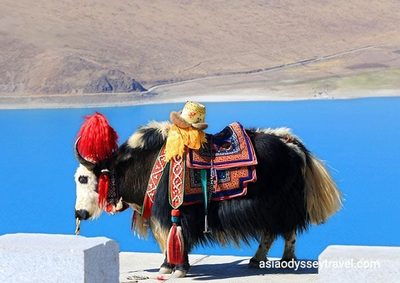
While Nepal's EBC trek takes 12-14 days of walking, Tibet's approach is accessible by vehicle from Lhasa via the Friendship Highway, past turquoise lakes, nomadic yak-herder camps, and ancient monasteries.
The two approaches could hardly feel more different. The Nepal (south) route begins in Lukla (2,860m) and involves a genuine multi-day trek through the Sherpa homeland of the Khumbu, passing Namche Bazaar, Tengboche Monastery, and the Khumbu Icefall, culminating at south base camp (5,364m). It is physically demanding, relies on teahouse lodges, and rewards you with deep immersion in Sherpa Buddhist culture. The Tibet (north) route lets you reach base camp by road in roughly two days from Lhasa, with no technical walking required — though you will want short acclimatization walks at the tent camp to enjoy the glacier moraine.
| Factor | North EBC (Tibet) | South EBC (Nepal) |
|---|---|---|
| Reachability | By vehicle from Lhasa (~2 days) | 12-14 day trek from Lukla |
| Base camp altitude | ~5,200m | 5,364m |
| Effort level | Moderate driving + short walks | Strenuous multi-day hiking |
| Best views | Full north face, Rongbuk sunrise | Kathmandu-to-Lukla flight, Khumbu Icefall |
| Cultural immersion | Tibetan nomads, monasteries | Sherpa villages, teahouse culture |
Many travelers combine both: drive the Tibetan route to see Everest from the north, then cross the Friendship Highway overland to Kathmandu and trek the Nepal side another time.
Best Season
April–May and September–October offer the clearest skies and most stable weather.
These are the two shoulder windows between the winter gales and the summer monsoon. In April–May, temperatures are rising, the plateau is thawing, and Everest's peak is visible on most mornings — this is also the main climbing season on both faces. In September–October, after the monsoon, the air is washed clean and autumn colors sharpen the landscapes. July–August is the monsoon: lower roads can be misty, the peak often hides behind cloud, but temperatures are mild and wildflowers bloom. November–March is brutally cold at base camp (nights below -20°C), though Lhasa itself remains clear and sunny by day.
Altitude Tips
The Tibetan Plateau averages 4,000m+. Key rules: ascend slowly, drink 3-4 liters of water daily, avoid alcohol the first few days.
Your drive climbs from Lhasa (3,656m) through passes such as Gyatso La (5,248m) before dropping to the base camp area. Because you ascend quickly by vehicle, altitude management is non-negotiable. Build in your Lhasa acclimatization days before heading higher, sleep lower than your highest point when possible, and listen to your body. A mild headache and breathlessness are normal; persistent vomiting, confusion, or a worsening cough are not — descend and seek help. For a full breakdown of symptoms and medication, read our Lhasa altitude guide. Because foreign travelers cannot travel independently in this border region, a licensed guide and vehicle are required — our itineraries schedule rest days precisely to manage elevation.
Packing List Essentials
- Down jacket (rated to -10°C)
- Sturdy hiking boots
- High-SPF sunscreen and UV sunglasses
- Reusable water bottles
- Camera with spare batteries
- Base-layer thermal tops and bottoms (merino wool)
- Wind and waterproof shell jacket and pants
- Warm hat, gloves, and a buff or neck gaiter
- Headlamp with spare batteries (tent camps have limited power)
- Personal medications, altitude pills, and a basic first-aid kit
- High-energy snacks (chocolate, nuts, electrolyte sachets)
Batteries drain quickly in the cold, so keep spares inside your sleeping bag overnight. Accommodation at the north base camp area is basic — heated tent camps or simple guesthouses near Rongbuk — so an insulated water bottle and a sleep sheet are worth carrying.
Permits & Logistics
Reaching Everest Base Camp from Tibet requires more than the standard entry permit. You will need a Tibet Travel Permit (TTP) plus the additional Alien's Travel Permit / border-area permit for the Everest (Xigatse / Tingri) restricted zone, all arranged through your registered tour operator before you depart. Independent foreign travel in this border belt is not permitted, and checkpoints along the Friendship Highway inspect your paperwork. Flights or trains into Lhasa are not allowed without the TTP in hand. For step-by-step paperwork, see how to apply for a Tibet Travel Permit.
Road distances are long — Lhasa to Shigatse is around 270km, and Shigatse to the Everest turn-off near Shegar (New Tingri) is another ~240km — so expect full day in the vehicle, with stops at monasteries, viewpoints, and nomad camps. The drive is part of the adventure: the plateau opens up in vast, breathless sweeps.
Where You Sleep & What It's Like
Overnighting near Everest's north face is simpler than it sounds but far from luxurious. The most atmospheric option is the heated tent camp near Rongbuk, where communal dining tents serve hot meals and your sleeping bag does the real work. A step up is a simple guesthouse in Shegar / New Tingri, the overnight base before the final run to the viewpoint. There are no five-star hotels here, and that is part of the appeal: the cold, star-hung sky above the plateau is the evening entertainment.
For budgeting, think in general high-plateau terms: simple guesthouse rooms in small towns are modestly priced, hot meals in local restaurants are affordable, and bottled water and snacks carry a small premium at altitude. Prices rise the closer you get to the border, so stock up in Shigatse. Our packages bundle the vehicle, driver, guide, permits, and accommodation into a transparent quotation — ask us for your dates.
Photographically, the north face rewards patience. The Rongbuk-to-base-camp stretch has the cleanest composition: prayer flags, mani stones, and the glacier moraine leading the eye straight to the pyramid of Everest. Wake before first light — the pre-dawn alpenglow, the silence, and the first sun on the summit are worth every early start. Bring a wide lens and a sturdy tripod; long exposures of the stars above the camp are among the best night skies you will ever see.
Frequently Asked Questions
Do I need to be fit to visit Everest Base Camp from Tibet?
No technical trekking fitness is required because you arrive by vehicle. You should, however, be comfortable with short, slow walks at 5,000m+, long days in the car, and basic tent-camp comfort. Good general health and proper acclimatization matter far more than gym fitness.
How many days do I need for the Tibetan EBC route?
A practical minimum is 5-7 days in Tibet: 2-3 acclimatizing in Lhasa, then 2-3 days driving to Shigatse, Shegar, and base camp, returning via Gyantse and Yamdrok Lake. Add more time if you want to continue overland to Kathmandu.
Can I see Everest clearly from base camp?
Only on clear days. The peak is frequently wrapped in cloud, especially during the monsoon and afternoon buildup. The April-May and September-October windows give the best odds, and sunrise or late afternoon alpenglow are the most photogenic moments.
Is north EBC suitable for children or older travelers?
The vehicle-based approach is generally more suitable than the Nepali trek, but the altitude remains serious. Children and older adults should acclimatize well in Lhasa first, avoid rushing, and consult a doctor about high-altitude travel.
Ready to stand at the foot of Chomolungma? Explore our Tibet and Everest tours, compare it with Nepal trekking adventures, or contact us to design a Lhasa-to-Everest itinerary tailored to your dates.