Most travelers come to Nepal for Everest, but this Himalayan kingdom offers so much more — medieval city squares, jungle safaris, paragliding over lakes, and some of the warmest hospitality on Earth.
Nepal packs eight of the world's ten highest peaks, a living Hindu-Buddhist syncretism, and 125 ethnic groups into a country roughly the size of Illinois. Everest Base Camp and the Annapurna Circuit rightfully draw trekkers, but if you only visit the mountains you will miss the Kathmandu Valley's UNESCO-listed palace squares, the Bengal-tiger jungles of Chitwan, and the laid-back lakeside charm of Pokhara. This guide covers the non-summit side of Nepal. Pair it with our Annapurna Circuit planning guide and Everest Base Camp first-timer guide for a full Himalayan picture, or browse all Nepal tours.
Kathmandu Valley
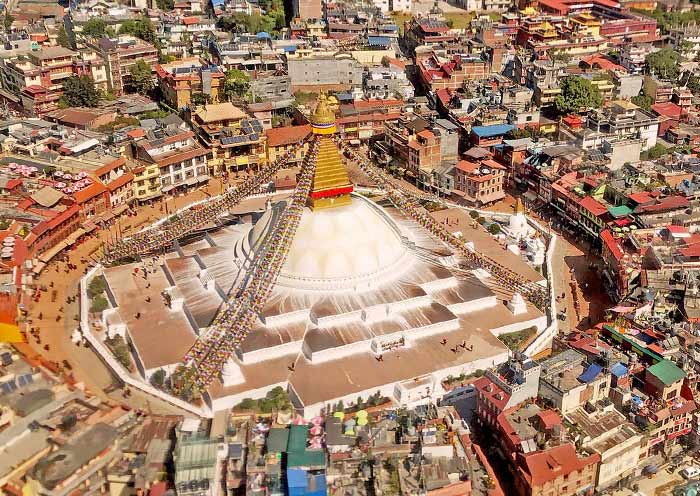
Durbar Square is the historic heart — a dense cluster of temples, palaces, and courtyards where you might glimpse the Kumari (living goddess) at her window. Boudhanath Stupa is one of the world's largest spherical stupas — walk the kora (circumambulation) clockwise with Tibetan pilgrims at sunset. Nearby Pashupatinath, Nepal's holiest Hindu temple on the Bagmati River, offers a powerful glimpse into Nepal's spiritual life.
The Kathmandu Valley hosts seven UNESCO World Heritage Districts, three of which are Durbar Squars — Kathmandu, Patan, and Bhaktapur. Patan (Lalitpur) is the artistic jewel, with the Krishna Mandir and bronze craft workshops still run by the same families that supplied the Malla kings. Bhaktapur, 14 kilometers east, is best explored on foot: the 55-Window Palace, the Nyatapola Temple, and the city's famous yogurt (juju dhau, "king of yogurts") reward a slow day. After the 2015 Gorkha earthquake, many temples were restored with UNESCO and international support, and the valley today buzzes again with woodcarvers, saffron-robed monks, and rooftop cafes.
Pokhara: The Adventure Capital
Set beside Phewa Lake with the Annapurna range reflected in its waters, Pokhara is Nepal's adventure hub. Paraglide from Sarangkot at sunrise, zip-line across river gorges, or simply paddle a boat across the lake and hike up to the World Peace Pagoda. The lakeside strip buzzes with cafes, live music, and trekking outfitters.
Sarangkot hill (1,600m) is the standard launch point for tandem paragliding — roughly 30 minutes in the air with views of Machhapuchhre (Fishtail Peak, 6,993m), Annapurna South, and Dhaulagiri. Below the lakeside, David's Falls and the Gupteshwor Mahadev Cave offer a cool afternoon, while the International Mountain Museum traces the history of Himalayan climbing. Pokhara is also the standard jump-off for the Annapurna Circuit, Poon Hill, and the Machhapuchhre Base Camp treks — see our Annapurna Circuit guide for route details.
Chitwan National Park
Swap mountains for jungle — Chitwan offers one-horned rhinos, Bengal tigers (if you're lucky), elephants, and crocodiles. Take a jeep safari at dawn and a dugout canoe ride on the Rapti River at dusk. The Tharu cultural village visit and dance performance is a colorful evening experience.
Chitwan, Nepal's first national park and a UNESCO site since 1973, sits in the subtropical Terai belt bordering India. It is home to roughly 700 greater one-horned rhinoceroses — about a third of the world's wild population — and a small but elusive Bengal tiger population. Jeep safaris run at 6:30 AM and 3 PM, when animals are most active. Bring neutral-colored clothing, a good pair of binoculars, and patience: rhino sightings are near-guaranteed, tigers are a lottery. A half-day canoe ride on the Rapti often spots gharial and mugger crocodiles sunning on banks.
Beyond the Big Three: Hidden Nepal
- Lumbini: Birthplace of Buddha, in the southern Terai. The Maya Devi Temple and the monastic zones built by Buddhist countries from around the world make a quiet, reflective day trip.
- Bandipur: A preserved Newar hilltop bazaar between Kathmandu and Pokhara, with cobbled streets, 18th-century mansions, and zero traffic — Nepal's best-kept mid-hill secret.
- Bardia National Park: Far-western Terai, less visited than Chitwan, with denser tiger sightings and wilder river camps.
- Ilam: Eastern tea hills near Darjeeling, where you can tour Nepali tea estates and watch Kanchenjunga at sunrise.
- Upper Mustang: A former forbidden kingdom on the Tibetan plateau, requires a special permit and a 10-day walk — the most otherworldly landscape in Nepal.
Food, People, and Practicalities
Nepal is roughly the size of Illinois but contains 125 ethnic groups speaking 123 languages, from Tibetan-speaking Sherpa in the high mountains to Indo-Aryan Tharu in the Terai. English is widely spoken in tourist areas, but learning a few Nepali phrases — namaste (hello), dhanyabad (thank you), bhana (let's go) — goes a long way with teahouse families and fellow trekkers. Nepali food is built on dhal bhat (lentil soup and rice), roti, and vegetable tarkari, with Newari specialties like choila (spiced grilled buffalo) and samaybaji around Kathmandu, and Tharu delicacies in the Terai. Everest beer and chhaang (millet brew) keep trekkers warm. Tipping is not traditionally expected but appreciated for guides and drivers. The Nepalese rupee trades around 130-135 to the US dollar; carry small bills, as change is scarce outside Kathmandu and Pokhara.
| Category | Budget (per day) | Mid-Range (per day) |
|---|---|---|
| Accommodation | $10-20 hostel/guesthouse | $40-80 hotel |
| Meals | $5-10 | $15-30 |
| Activities | $5 free walks | $30-80 safari/paraglide |
| Local transport | $2-5 bus | $20-40 taxi |
Festivals & When They Align With Travel
Nepal's calendar is dense with festivals, and traveling during one transforms a good trip into an unforgettable one. Dashain (September/October, 15 days) is the national holiday — families gather, goats are sacrificed, and elders put tika on your forehead. Tihar (late October, 5 days) is the festival of lights, with marigold garlands and oil lamps lining every doorstep. Holai (March) paints Kathmandu red and pink. Buddha Jayanti (May) draws pilgrims to Lumbini. Timing your non-trekking days around these festivals means streets fill with music, dance, and feasts — but also that government offices and many shops close, so plan accordingly. For a month-by-month Asia view, see our best time to visit each Asian country guide.
Frequently Asked Questions
Is Nepal safe for solo female travelers?
Nepal is generally one of the safer countries in South Asia for solo travelers, with strong Buddhist-Hindu traditions of hospitality. Normal precautions apply: avoid isolated streets at night, use registered taxis, and dress modestly in temples. Many solo women join organized trekking groups for companionship and safety.
When is the best time to visit Nepal?
October to November offers clear skies, comfortable temperatures, and festival season (Dashain and Tihar). March to April is the spring alternative, with rhododendron blooms. The monsoon (June-September) makes trekking slippery but brings lush jungle for Chitwan safaris.
Do I need a visa for Nepal?
Most nationalities obtain a visa on arrival at Tribhuvan International Airport in Kathmandu or at border crossings, paying $25-100 depending on length of stay, plus a passport photo. Check current rules before departure, as border crossings with India remain open.
How many days do I need?
Seven days covers Kathmandu, Pokhara, and Chitwan without rushing. Ten to fourteen days allows a short trek (Poon Hill, 4-5 days) or an extension to Lumbini or Bandipur. A full Annapurna Circuit or Everest Base Camp requires 12-18 days on top.
Nepal is far more than a summit. Whether you come for the temples, the rhinos, or the paragliding, you leave with friends. Request a custom Nepal itinerary and let our local team design a trip that blends Kathmandu's culture, Pokhara's lakes, and Chitwan's jungle — or see our curated Nepal departures.