Malaysia is three countries in one — the Malay heartland, Chinese trading ports, and Indian traditions, all woven together with some of the world's oldest rainforests and best street food. Here's where to go.
Sitting at the crossroads of Southeast Asia, Malaysia blends Malay, Chinese, Indian, and indigenous (Orang Asli and Dayak) heritage into a single, surprisingly easy travel experience: English is widely spoken, the ringgit remains affordable, and Islamic, Buddhist, Hindu, and Christian festivals happen side by side throughout the year. This guide is for first-time visitors who want one country that delivers skyscrapers, beaches, food, and wildlife without a dozen border crossings.
Kuala Lumpur
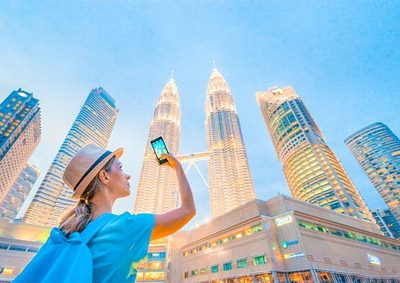
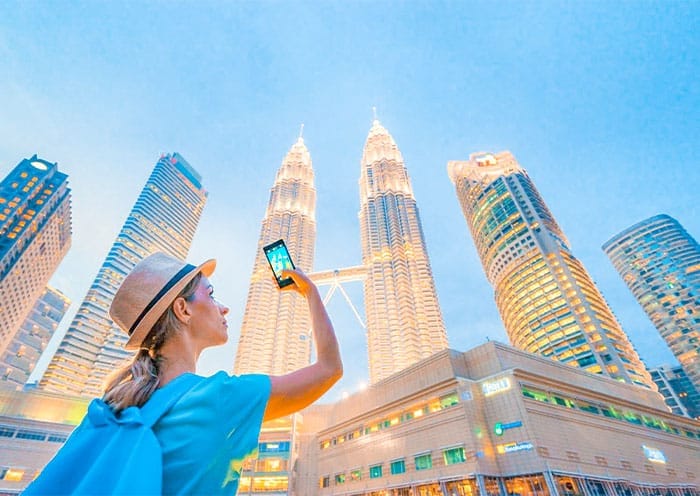
The Petronas Twin Towers dominate the skyline — book tickets in advance for the skybridge. Batu Caves, just outside the city, features a giant golden statue of Lord Murugan and 272 rainbow-colored steps leading to limestone cave temples. For street food, Jalan Alor is legendary — sizzling satay, char kway teow, and icy cendol.
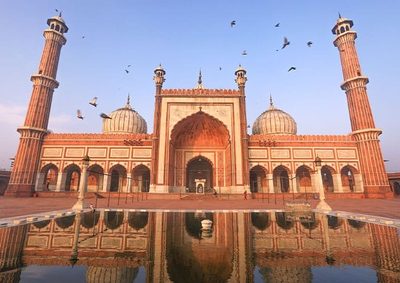
Kuala Lumpur (KL) is where modern Malaysia announces itself: the 88-story Petronas Towers rise above the KLCC park, while Chinatown (Petaling Street), the colonial Merdeka Square, and the Moorish-style Jamek Mosque reveal the layers beneath. Spend your first evening on a rooftop bar overlooking the towers lit up after dark, and your morning at the Central Market for batik and crafts. KL is also a superb food city — do not miss nasi lemak (coconut rice with spicy sambal) for breakfast.
For a half-day escape, the FRIM Rainforest Canopy Walkway on the city's outskirts lets you walk a 200-meter bridge through the canopy of old-growth forest just 45 minutes from the Petronas Towers. The Islamic Arts Museum Malaysia is one of the best museums of its kind in Southeast Asia, with exquisite textiles, metalwork, and architecture galleries.
Penang: Food Capital of Asia
George Town is a UNESCO-listed wonder of colonial architecture, street art, and some of the best food in the world. Hunt for Ernest Zacharevic's murals in the old town. Eat assam laksa (spicy-sour fish noodle soup), nasi kandar (rice with curries), and cendol (shaved ice with coconut milk and palm sugar) — all in one day.
Penang, an island off the northwest coast, is consistently ranked among the top street-food destinations on the planet. Beyond the murals, wander the Clan Jetties (stilted Chinese villages), visit the Khoo Kongsi clan temple, and hike up Penang Hill for cooler air and panoramic views. The best eating happens at hawker centers like Gurney Drive, New Lane, and Kimberley Street, where a full meal costs under $5. Plan on at least three days in George Town.
Penang also rewards slow, food-focused wandering: try char kway teow (wok-fried rice noodles with prawns), Hokkien mee (spicy prawn noodle soup), and rojak (fruit and vegetable salad with palm sugar sauce). Hawker stalls rotate specialties, so asking locals which stall is best rarely leads you astray.
Malaysian Borneo
Sabah and Sarawak on Borneo offer something completely different: 130-million-year-old rainforests, orangutans at Sepilok Rehabilitation Centre, Mount Kinabalu (4,095m), and some of the world's best diving at Sipadan Island. The rainforest canopy walk in Danum Valley is a bucket-list experience.
Borneo is the wild counterpoint to peninsular Malaysia. In Sabah, the Sepilok Orangutan Rehabilitation Centre near Sandakan lets you watch rescued orangutans at feeding platforms, while Kinabatangan River cruises reveal proboscis monkeys, pygmy elephants, and hornbills. Sipadan Island, off Sabah's east coast, is repeatedly named one of the world's top dive sites, with walls teeming with reef sharks, turtles, and manta rays. In Sarawak, the Niah and Mulu national parks hold vast cave systems and ancient cave paintings.
Borneo's wildlife is the draw: proboscis monkeys with pendulous noses, the rare pygmy elephant, hornbills, and clouded leopards. River cruises on the Kinabatangan at dawn are the best wildlife viewing, and a night drive in Tabin Wildlife Reserve often reveals civets, porcupines, and slow lorises.
Malacca: The Straits Heritage City
Halfway between KL and Singapore, Malacca (Melaka) is a UNESCO-listed river city that was the straits' great trading port. Walk the Dutch square with its red Christ Church, climb the ruins of St. Paul's Church, and cruise the lantern-lit river at night. Malacca is the birthplace of Peranakan (Straits Chinese) culture, and its heritage shophouses, antiques shops, and Nyonya food make it a perfect one- or two-day stop.
Langkawi and the Island East Coast
West of Penang, the Langkawi archipelago offers duty-free shopping, the dramatic SkyCab cable car, and quiet beaches like Datai Bay and Cenang. Across the peninsula on the east coast, the Perhentian Islands and Redang Island are thin-sand, clear-water reef destinations ideal for snorkeling and a week of unplugged beach time. The east coast season is short — roughly March to October — when the monsoon rains fall away.
Festivals, Food, and the Three Cultures on a Plate
What makes Malaysia unique is how the three cultures meet daily at the dining table: Malay nasi lemak, Chinese dim sum and bak kut teh, and Indian roti canai and banana-leaf curries are all breakfast options depending on which neighborhood you wake up in. Timing your trip around Chinese New Year (January-February), Thaipusam (January-February, celebrated dramatically at Batu Caves), or Hari Raya (marking the end of Ramadan) lets you see each culture at its most vivid. Travelers looking for more island-hopping ideas can compare options in our guide to the best islands in Asia.
Best Time to Visit and Getting Around
Malaysia is tropical year-round, with temperatures between 25°C and 33°C. The west coast (Penang, Langkawi, KL) is drier November-August, while the east coast (Perhentian and Redang islands) peaks May-October. Flights connect KL to Penang (1 hour), Kota Kinabalu in Sabah (2.5 hours), and Kuching in Sarawak (1.5 hours) several times daily, making the peninsula-plus-Borneo combination easy in 10-14 days. Budget-wise, Malaysia is one of Southeast Asia's easiest value destinations: a private airport transfer costs around $15, a Petronas skybridge ticket around $12, and a full hawker dinner under $5. English is spoken almost everywhere, and ride-hailing is cheap and reliable.
| Factor | Peninsular Malaysia | Malaysian Borneo |
|---|---|---|
| Main attractions | KL, Penang, Malacca, Langkawi | Sepilok, Kinabalu, Sipadan, Mulu |
| Best weather window | November-August (west coast) | March-October |
| Avg. hawker meal | $2-5 | $2-5 |
| How long to spend | 5-7 days | 4-6 days |
Frequently Asked Questions
Is Malaysia good for a first-time Southeast Asia trip?
Yes. Malaysia is one of the easiest entry points to Southeast Asia: English is widely spoken, transport is reliable, halal food makes dining straightforward, and the country combines cities, food, beaches, and rainforest in one compact geography.
How many days do I need for Malaysia?
Seven days covers Kuala Lumpur, Penang, and Malacca comfortably. Ten to fourteen days lets you add Malaysian Borneo for orangutans and diving, or a beach stop on Langkawi or the Perhentians.
Is Malaysia expensive compared with neighboring countries?
Malaysia sits in the middle of Southeast Asia's cost spectrum: cheaper than Singapore, slightly more expensive than Indonesia or Vietnam, but excellent value once you factor in food, transport, and comfort. Hawker meals and public transport keep budgets low.
Do I need a visa for Malaysia?
Many nationalities receive visa-free entry for 30 or 90 days on arrival. Check the current Malaysian immigration rules for your passport, and ensure your passport is valid for at least six months.
What is the best way to combine peninsular Malaysia with Borneo?
Fly in and out of Kuala Lumpur, spend five days on the peninsula (KL, Malacca, Penang), then take a direct flight to Kota Kinabalu for four days of orangutans and diving. Booking the internal flights together with your international ticket usually saves money.
Three cultures, one seamless journey: explore our Malaysia tours, read the Asia travel guide weather planner, or contact us to build a Kuala Lumpur, Penang, and Borneo itinerary tailored to your interests.