
Why Plan a Trip to China in 2026?
Planning a trip to China can feel overwhelming — it's a huge country, the language barrier is real, and there's so much to see. This step-by-step guide breaks everything down so you can plan with confidence. China is the world's third-largest country by land area, spanning five geographic time zones but officially running on one national clock. It hosts 59 UNESCO World Heritage Sites, more than any other country, and its 1.4 billion people speak hundreds of regional dialects. The good news is that first-time visitors can see the very best of China in 10-14 days by focusing on a small number of world-class destinations connected by the world's largest high-speed rail network.
Step 1: Choose Your Travel Style
First-time visitors: 8-10 days covering Beijing → Xi'an → Shanghai (the Golden Triangle). Culture enthusiasts: Add Guilin/Yangshuo and Chengdu. Nature lovers: Zhangjiajie, Huangshan, or Yunnan. Adventure travelers: Tibet, the Silk Road, or Sichuan's high-altitude trekking. Family travelers: Beijing, Chengdu (pandas!), and Shanghai are kid-friendly. Browse China tours →
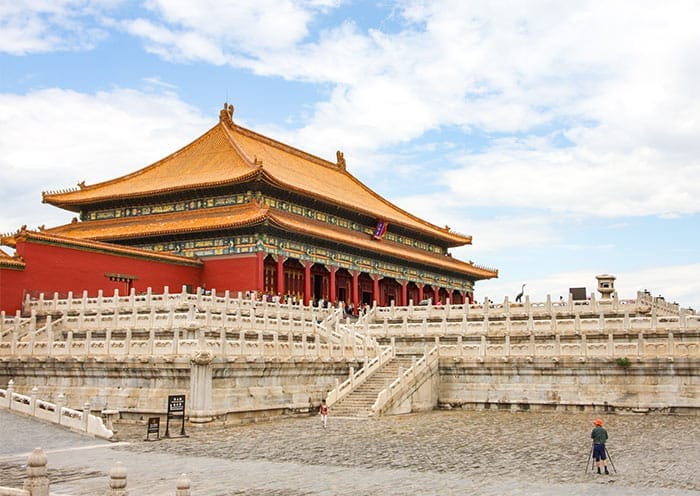
The Golden Triangle of Beijing, Xi'an, and Shanghai remains the single best first China trip: it covers imperial history (the Forbidden City, the Great Wall), the Terracotta Army, and futuristic modern China (the Bund, Pudong skyline) with almost no domestic flights required. Travelers with more time should add either Chengdu (pandas, Sichuan hotpot, base for Tibet), Guilin/Yangshuo (karst mountains, Li River cruise), or Zhangjiajie (the quartz sandstone pillars that inspired Avatar). For a deeper dive into choosing a route, see our guide to the top places to visit in China.
Step 2: Decide When to Go
Spring (April-May): Mild weather, cherry blossoms, fewer crowds — ideal for most regions. Summer (June-August): Hot and humid, but great for families with school vacations. Book ahead. Autumn (September-October): The best season — clear skies, comfortable temperatures, and stunning fall foliage. Winter (December-February): Cold but magical — fewer crowds, lower prices, and the Harbin Ice Festival.
The single most important planning rule: avoid the first week of October (National Day "Golden Week") and the week of Chinese Lunar New Year, when domestic tourism surges to 500+ million trips and trains, flights, and hotels sell out weeks in advance. Spring (April-May) and autumn (mid-September to mid-November) offer the most comfortable nationwide weather. For month-by-month weather detail, read our month-by-month China weather guide.
Step 3: Visa & Documentation
Most nationalities now enjoy 15-day visa-free travel to China. For longer stays, the L (tourist) visa is straightforward. See our full visa guide → for details. Double-check your passport validity (6 months beyond entry), apply for an eSIM or VPN before departure, and save digital copies of your passport, visa, and hotel confirmations in both your email and a cloud drive. If you plan to visit Tibet, remember that the Tibet Travel Permit takes at least 20 working days to process and can only be arranged through a licensed agency — see our Tibet permit guide.
Step 4: Build Your Itinerary
A workable first-timer itinerary looks like this: Days 1-3 Beijing (Forbidden City, Tiananmen Square, Mutianyu Great Wall, Summer Palace, hutong rickshaw). Day 4 high-speed train to Xi'an (4.5 hours). Days 4-5 Xi'an (Terracotta Army, City Wall bike ride, Muslim Quarter night market). Day 6 high-speed train or flight to Shanghai (about 6.5 hours by train or 2.5 hours by flight). Days 6-8 Shanghai (the Bund, Yu Garden, Shanghai Tower, day trip to Suzhou water towns). Add 2 days for Chengdu (panda base, Sichuan hotpot) or 3 days for Guilin (Li River cruise to Yangshuo) if you have the time.
Step 5: Set Your Budget
Budget: Mid-range travelers spend $150-250/day including accommodation, food, transport, and entrance fees. Independent backpackers can get by on $50-80/day; luxury travelers will spend $300-500/day. High-speed rail between major cities costs $70-130 per leg, domestic flights $80-200, and street food meals $3-8. See our full China travel budget breakdown for a line-by-line estimate. When comparing guided tour prices, remember that the headline rate typically includes 4- or 5-star hotels, an English-speaking guide, all trains and transfers, and most entrance fees — independent travelers should build those costs back in before concluding they will save money.
Step 6: Pack, Apps, and Book
Packing: Comfortable walking shoes (you will walk 5-10 km on sightseeing days), layers for changing weather, a universal plug adapter (China uses Type A/C/I, 220V), a power bank, and a small roll of toilet paper (public toilets often run out). Essential apps: WeChat (messaging and payments), Alipay (digital wallet linked to an international card), Didi (ride-hailing), and Apple Maps or Baidu Maps. Install a VPN before arrival — VPN websites are blocked inside China. Booking: Book 2-3 months ahead for peak seasons (April-May, September-October) and 4-6 months ahead for Chinese New Year. For the digital side, see our guides to internet and VPNs and payment methods.
Step 7: Book Flights and Lock in Reservations
For international flights, the cheapest fares from North America to Beijing, Shanghai, or Hong Kong typically appear 3-5 months in advance. Flying into one hub and out of another (open-jaw booking) saves a backtrack: for example, fly into Beijing and out of Shanghai. Domestic flights within China should be booked 4-6 weeks ahead on Trip.com or the airline's own app. Hotels in peak months (April, October) should be held with a free-cancellation rate until your visa is approved. If you are joining one of our guided tours, international flights remain your own responsibility, but every domestic connection, hotel check-in, and train ticket is arranged in advance and reconfirmed by your guide on the ground. For a broader Asia-wide planning overview, see our 10-step Asia trip planning guide.
Frequently Asked Questions
How many days do I need for a first trip to China?
Ten to fourteen days is the sweet spot. Eight days is the minimum for Beijing-Xi'an-Shanghai without rushing; 14 days lets you add Chengdu or Guilin. Trips shorter than 7 days are not worth the long-haul flight and jet lag.
Is China safe for solo travelers?
Yes. China has very low rates of violent crime against tourists; pickpocketing in crowded metro and market areas is the main risk. The main challenges are language and digital access, both of which are solvable with a translation app and a VPN.
Do I need a guided tour, or can I travel independently?
Independent travel is possible in the major cities thanks to metro systems and translation apps, but first-time visitors usually save time and stress with a guided tour, especially in Xi'an, Chengdu, and along the Silk Road where English is less common. We offer both private and small-group options.
What should I know about the language barrier?
English is rarely spoken outside major tourist sites and international hotels. Download offline Chinese translation packs on Google Translate or Microsoft Translator, and save your hotel addresses as Chinese characters to show taxi drivers.
When is the cheapest time to go to China?
Mid-January to mid-February (excluding the Chinese New Year week) and early December are the cheapest windows. Flights from North America and Europe can be 30-40% lower than in October peak season.
Ready to start? Browse our fully planned China itineraries or request a custom trip quote — our team has served more than 100,000 travelers across 22 countries and would love to design your first China journey.