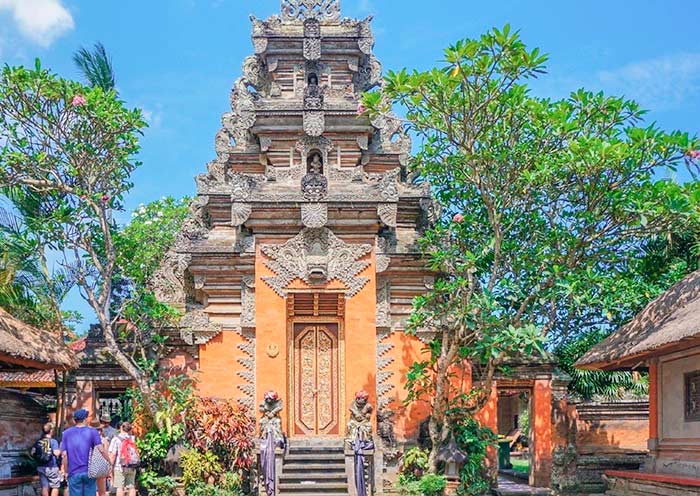
Indonesia is the world's largest archipelago — over 17,000 islands. Beyond Bali's beaches and rice terraces, there's an entire nation of volcanoes, ancient temples, dragons, and some of the best diving on Earth.
Stretching more than 5,000 kilometers along the equator, Indonesia offers everything: Hindu temple complexes in Java, tribal villages in Sumatra, Komodo dragons in Nusa Tenggara, and reefs that draw divers from every continent. This guide is for travelers who love Bali but want to see what lies beyond the island of gods.
Bali: The Island of Gods
Ubud is Bali's spiritual and artistic heart — yoga shalas, temple ceremonies, and the sacred Monkey Forest. The Tegallalang rice terraces are best visited at sunrise before the crowds. For beaches, head south to Uluwatu (cliff-top temples and surf breaks) or east to Amed (black sand, great snorkeling). Tanah Lot temple at sunset is the postcard shot.
Bali rewards slow travel: spend mornings in Ubud's museums and yoga studios, afternoons at the Tegalalang terraces and Tukad Cepung waterfall, and evenings watching Kecak fire dances at Uluwatu. For a quieter Bali, head east to Amed and the Mount Batur area, or north to Lovina for dolphin-watching at dawn. Nusa Penida, a short boat ride from Bali's southeast coast, delivers dramatic cliffs and manta ray snorkeling.
Ubud itself is walkable: the Campuhan Ridge Walk at sunrise is a gentle, scenic hike through rice fields, and the Goa Gajah (Elephant Cave) temple complex dates to the 9th century. Spa treatments, yoga teacher trainings, and cooking classes make Ubud a slow-travel destination that rewards staying a week rather than a few days.
Java: Temples & Volcanoes
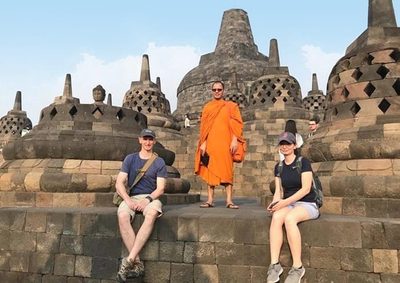
Borobudur is the world's largest Buddhist temple — arrive at dawn to witness the stupas emerge from the mist. Nearby Prambanan is a magnificent Hindu temple complex. For adventure, hike Mount Bromo at sunrise (the volcanic landscape looks like another planet) or tackle Mount Ijen with its eerie blue sulfur flames.
Java is Indonesia's political and cultural core, home to Jakarta, a metropolitan area of over 10 million people. Borobudur (UNESCO, 9th century) and Prambanan (UNESCO, 9th century) near Yogyakarta are the island's crown jewels; Yogyakarta itself is the center of classical Javanese dance, gamelan, and batik. The Bromo-Tengger-Semeru national park loop takes two days from Surabaya and is one of the most dramatic volcanic landscapes on Earth.
Do not miss Jomblang Cave near Yogyakarta, where a beam of sunlight pierces a collapsed cavern floor at midday, or the Sewu and Kedung Tumpang waterfalls east of the city. Yogyakarta's Kraton (sultan's palace) and the batik workshops of Kota Gede round out the cultural side.
Komodo National Park
The Komodo dragon — the world's largest lizard, growing up to 3 meters — is found only here. Trek with a ranger on Komodo or Rinca Island. But the real star is underwater: Komodo has some of the world's best diving, with manta rays, sharks, and pristine coral.
Accessible by flight from Bali to Labuan Bajo on Flores, Komodo National Park (UNESCO) is best explored by liveaboard or day boat trips. Do not miss Pink Beach, where coral fragments tint the sand rose-pink, and Manta Point, where giant oceanic mantas glide past cleaning stations. Rangers require all visitors to stay on marked trails around the dragons, and close encounters have been fatal, so follow instructions.
Divers rate Komodo's Caesar's Drop-off, Karang Makassar (the manta ray cleaning station), and Crystal Rock among the best in the world, with encounters with reef sharks, sunfish (Mola mola, seasonally July-October), and enormous schools of bumphead parrotfish.
Lombok, the Gili Islands, and Nusa Penida
Just east of Bali, Lombok offers the volcanic cone of Mount Rinjani (3,726m) — a two-day trek to the crater lake Segara Anak — and quieter beaches at Senggigi and the south coast. The tiny Gili Islands (Trawangan, Meno, Air) are car-free, ringed by coral reefs, and perfect for snorkeling with sea turtles. Closer to Bali, Nusa Penida delivers dramatic cliffs (Kelingking Beach) and manta ray snorkeling, while Nusa Lembongan is a laid-back base for surf and dive trips.
The Gili Islands are also famous for turtle snorkeling (you can swim with green and hawksbill turtles just offshore), shipwreck diving, and a famously no-motorized-vehicle atmosphere. Gili Trawangan is lively; Gili Air and Gili Meno are quieter and romantic.
Sumatra: Orangutans and Volcanoes Beyond Java
A few hours' flight west of Bali, Sumatra is Indonesia's wilderness frontier. Bukit Lawang, on the edge of the Leuser Ecosystem, is the best place on Earth to see wild orangutans in the rainforest on a 2-3 day guided trek. Further south, Mount Kerinci (3,805m) climbs through montane forest, and Lake Toba in the north is the world's largest volcanic lake, ringed by Batak villages. Sumatra is for travelers who have seen Bali and want the nation's wilder heart.
Best Time to Visit Indonesia
Indonesia sits on the equator, so seasons are split into dry (April-October) and wet (November-March). The dry season is the best window for Bali, Java, and Komodo, with low humidity and clear skies for volcano hikes. July and August are peak European holiday months — book temples, liveaboards, and lodges early. Divers should target April-June and September-October for the calmest water and best visibility.
- Visa: Many nationalities get a 30-day visa on arrival, extendable once; free visa-free entry applies to selected passports.
- Getting around: Domestic flights (Garuda, Lion, AirAsia) connect Bali, Yogyakarta, Surabaya, Labuan Bajo, and Lombok cheaply.
- Currency: Indonesian Rupiah (IDR). Bring cash to the smaller islands; ATMs are reliable in Bali and major cities.
- Safety: Follow ranger rules around Komodo dragons and hire certified guides for volcano hikes; Bali's traffic is dense, so use licensed drivers or ride-hailing apps.
Budget travelers will find Bali hostels from $10 a night, private villas from $50, and a warung (local eatery) meal from $2-3. Komodo liveaboards are the single biggest expense, typically $400-800 for a 3-4 night trip, but day boats from Labuan Bajo cost as little as $50.
Cultural Tips for Indonesia
Indonesia is the world's largest Muslim-majority nation, though Bali is predominantly Hindu. Dress modestly when entering temples and mosques, use your right hand for eating and greeting, and never touch someone's head, even a child's. Bargaining is expected in markets but not in fixed-price shops, and a smile and "terima kasih" (thank you) goes a long way.
Frequently Asked Questions
How many days do I need for Bali plus Java and Komodo?
Ten days covers Bali and one anchor (either Yogyakarta's temples or Komodo's dragons). Fourteen days is ideal for a Bali-Yogyakarta-Bromo-Komodo combo, with internal flights linking each leg.
Is Komodo worth visiting if I don't dive?
Absolutely. Even non-divers love the dragon treks, Pink Beach, viewpoints over the islands, and manta ray snorkeling. Liveaboards welcome snorkelers and photographers.
Is Bali safe and easy for first-time visitors?
Bali is one of Southeast Asia's most visitor-friendly islands: English is ubiquitous in the south and Ubud, tourism infrastructure is mature, and transport (ride-hailing, private drivers) is inexpensive. Sensible precautions against traffic and sun are enough.
When is the cheapest time to visit Indonesia?
The wet season (November-March) brings lower hotel prices and fewer crowds, except around Christmas and New Year. April-June and September-October offer the best balance of weather and price.
Do I need a guide for Mount Batur or Rinjani?
Yes. Both volcanoes require certified local guides, and Rinjani treks must be booked through registered operators with permits. Sunrise treks on Batur are available from Ubud and Kuta; Rinjani is a 2-day, 1-night trek that requires moderate fitness.
Want to see beyond Bali's postcard? Browse our Indonesia tours, compare island options in Asia's best beaches guide, or ask us to design a Bali-Java-Komodo itinerary.